Focuses on commonly-sought items with a single or small number of real sources — not every item in the game. Multiplayer/trading-hall strategies are omitted; this lists vanilla survival sources only.
Item Source Finder
Reverse-lookup: pick any common item and see every way to get it — crafting, mining, trading, looting, or mob drops.

Quick guides
How to use this tool, and the questions players ask most.
What is the best level to find diamonds in Minecraft?
Diamonds generate most frequently between levels Y = -58 and Y = -64, with Y = -58 being optimal for strip mining to avoid exposed bedrock. Diamond ore replaces stone and deepslate below Y = 16 throughout the Overworld.
Where do you find 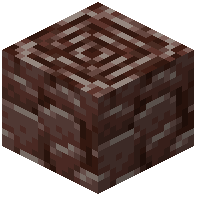 ancient debris for Netherite in Minecraft?
Ancient debris spawns in the Nether between Y = 8 and Y = 119, peaking heavily at level Y = 15. You need a diamond pickaxe or netherite pickaxe to mine it, and each block yields one ancient debris.
Where is the best place to find iron in Minecraft?
Iron ore generates most abundantly at mountain level Y = 232, while the best underground concentration occurs at Y = 16. It spawns across the Overworld in two large distribution batches between heights Y = -64 and Y = 320.
How do you locate items using commands in Minecraft?
Minecraft does not have a native command to find specific items, though you can locate loot containers using /locate structure. The Item Source Finder lists every alternative acquisition method, including mob drops, villager professions, and chest loot tables.
Where can you find axolotls in Minecraft?
Axolotls spawn underground exclusively in the lush caves biome below Y = 63 when water is within 5 blocks above a clay block. They require complete darkness with a block light level of 0.
More on 9Minecraft
Other tools on 9Minecraft you may find useful.


More Reference tools
Other tools on 9Minecraft you may find useful.


